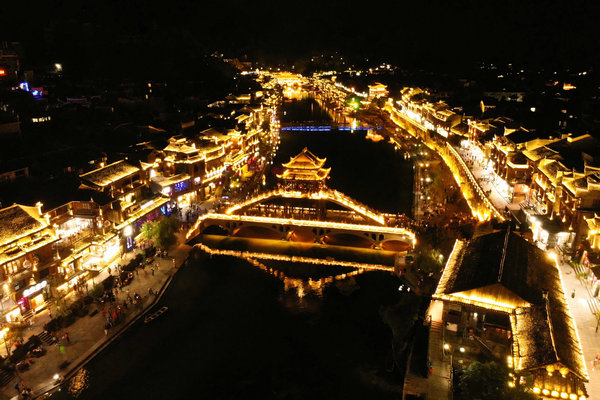
Fenghuang Ancient Town
Introduction
Fenghuang Ancient Town, located in the Xiangxi Tujia and Miao autonomous prefecture of Hunan province, is a place renowned for its stunning natural beauty, rich cultural heritage, and diverse ethnic customs. This historic town is predominantly inhabited by ethnic groups such as the Miao and Tujia, who comprise more than 73 percent of its total population. Fenghuang is designated as a national historical area, highlighting its significance in Chinese history. The town has attracted countless visitors over the years, charmed by its preserved architecture, vibrant traditions, and picturesque landscapes. It is often described as an enchanting place, offering a glimpse into the past while harmoniously integrating with the surrounding natural environment.
History
Early Settlement
Fenghuang Ancient Town's origins trace back over a millennium, with its strategic location along the Tuojiang River providing a natural foundation for settlement and growth. The town developed as a significant hub for trade and cultural exchange, influenced by the diverse ethnic groups settling in the region. Its early settlers, including the Miao and Tujia peoples, contributed to the rich tapestry of traditions and customs that remain integral to Fenghuang's identity today. The early settlement period laid the groundwork for the town's subsequent development and historical significance.
Ming and Qing Dynasties
The Ming (1368-1644) and Qing (1644-1911) dynasties marked a period of substantial architectural and cultural development for Fenghuang Ancient Town. During the Ming Dynasty, city gates and walls were constructed, fortifying the town and establishing its urban structure. The period also saw the construction of ancestral halls, temples, shops, guild halls, and government offices, which have been preserved to this day. Fenghuang maintained its urban construction pattern and historical appearance from these dynastic eras, offering visitors a unique glimpse into the past. The integration of buildings with the natural environment created a harmonious scene of mountains, water, and human settlement, which continues to enchant visitors.
Modern Developments
The modern era for Fenghuang Ancient Town has been characterized by efforts to preserve its historical integrity while accommodating the growing tourism industry. Since 2001, the town has embarked on a path of economic development, focusing on tourism as a key sector. The tourism industry's expansion has transformed many historical structures into accommodations and attractions for visitors. Fenghuang's popularity as a tourist destination has soared, with millions of people visiting annually to experience its historical sites, ethnic culture, and scenic beauty.
Culture
Ethnic Groups
Fenghuang Ancient Town is primarily inhabited by the Miao and Tujia ethnic groups, who significantly influence the town's culture and traditions. These ethnic communities contribute to the vibrant tapestry of customs, crafts, and celebrations that characterize Fenghuang. Their music, dance, and art forms are integral to the town's cultural identity, providing visitors with a unique opportunity to experience the diversity and richness of China's ethnic heritage. The interactions between different ethnic groups in Fenghuang have created a harmonious cultural blend, making it a fascinating destination for those interested in ethnographic studies and cultural exploration.
Festivals and Traditions
Fenghuang Ancient Town is known for its vibrant festivals and traditions that reflect the customs of its ethnic inhabitants. The Miao and Tujia communities celebrate various traditional festivals, showcasing unique performances such as suona blowing, Miao drumming, Miao singing, ladder climbing, plow stepping, and costume exhibitions. These festivals provide a lively and colorful experience for visitors, offering a glimpse into the rich cultural heritage and communal spirit of the town. The integration of traditional celebrations with modern tourism activities ensures that Fenghuang's cultural legacy is preserved and shared with a wider audience.
Architecture
The architecture of Fenghuang Ancient Town is a testament to its historical significance and cultural heritage. The town is home to numerous ancient buildings, including ancestral halls, temples, shops, and guild halls. These structures, dating back to the Ming and Qing dynasties, have been preserved and integrated with the natural environment, creating a harmonious scene of urban and rural elements. The hanging buildings along the Tuojiang River are particularly iconic, showcasing unique wooden structures that face the water and the street. This distinctive architectural style is a defining feature of Fenghuang, attracting visitors interested in historical architecture and cultural preservation.








